Tell us about the job
Takes about a minute. No obligation.
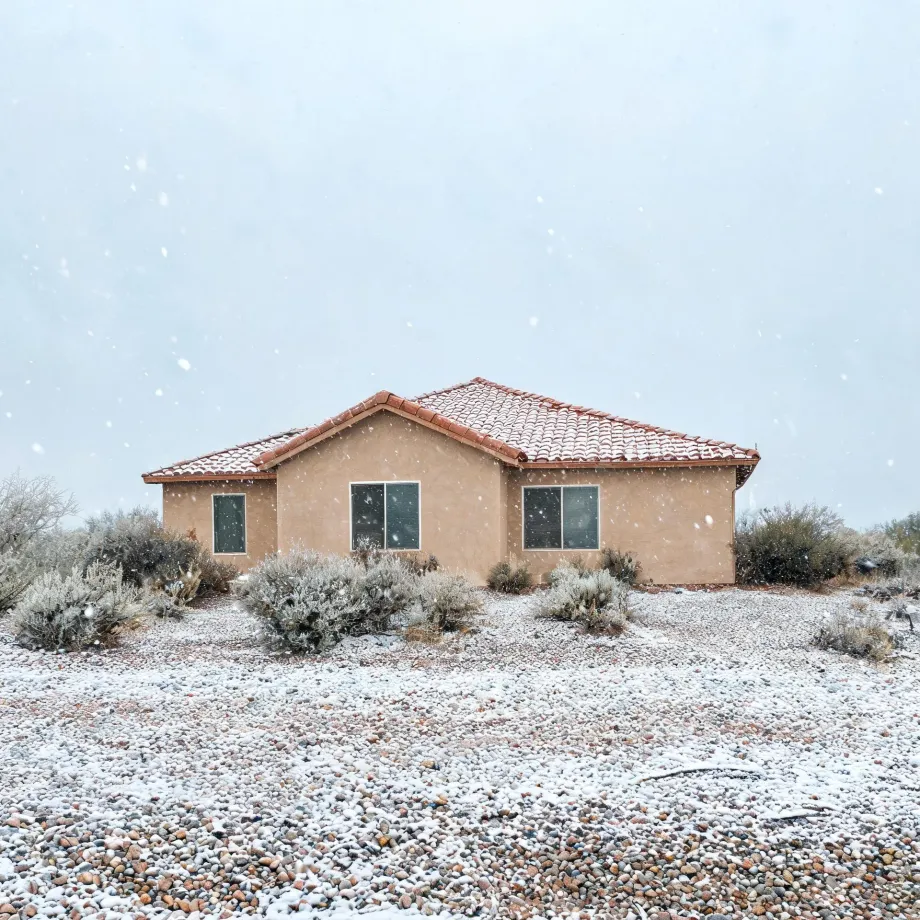
A heat pump running nearly year-round puts its compressor, reversing valve, and refrigerant circuit under sustained stress that a system with a shorter season simply never faces. Homes in Rio Arriba County, NM run heat about nine months a year, from September through May. The compressor in particular starts and stops through cold months when its capacity is already being pushed, and that cycling pattern is what wears contacts, stresses the refrigerant lines, and eventually surfaces as a fault. A contractor diagnosing a failure here checks those high-load components first, because that is where accumulated wear shows up earliest.
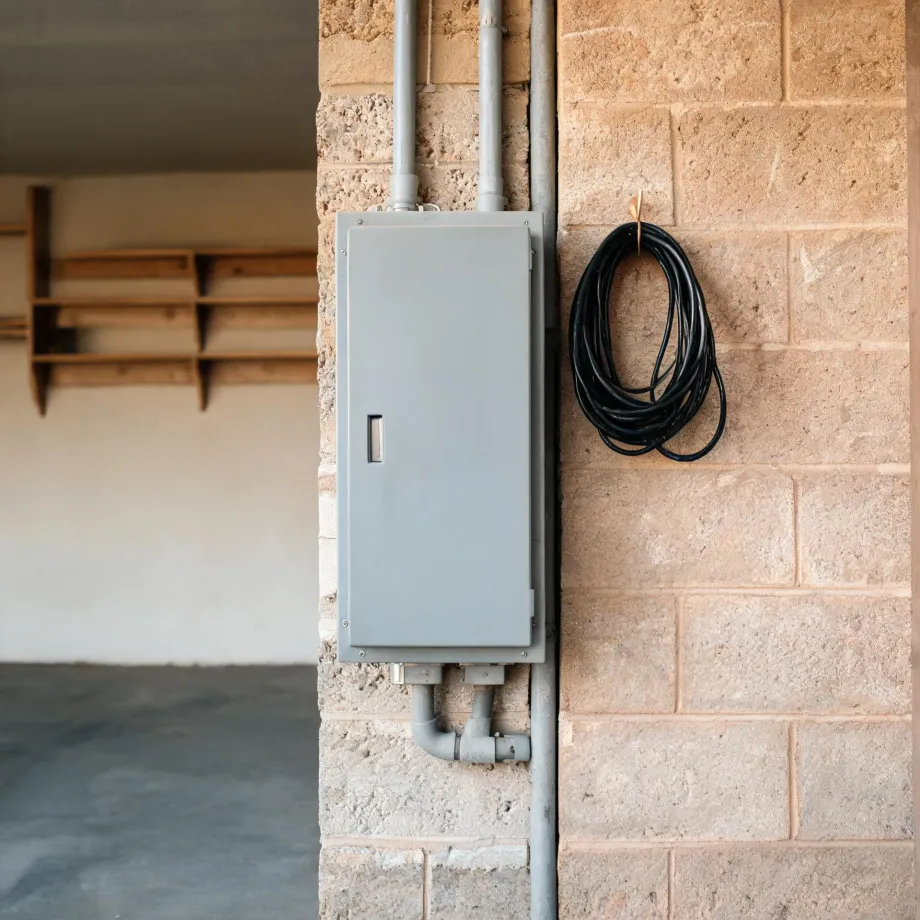
Ductwork and wiring that were adapted across replacement cycles do not fail the same way a clean install does. Joints that held through one system may not hold through the next; electrical connections get spliced where they were once continuous. Half the homes in Rio Arriba County, New Mexico were built in 1984 or earlier (2020-2024 ACS 5-year). A contractor opening a heat pump in stock this old is likely to find evidence of those prior hands: non-original line sets, mismatched connections, or parts sourced from a system that predates what is running now. Whether a part is still made for a unit of this vintage determines the repair path as much as the fault itself does.
The Parts of a Heat Pump a Contractor Checks First
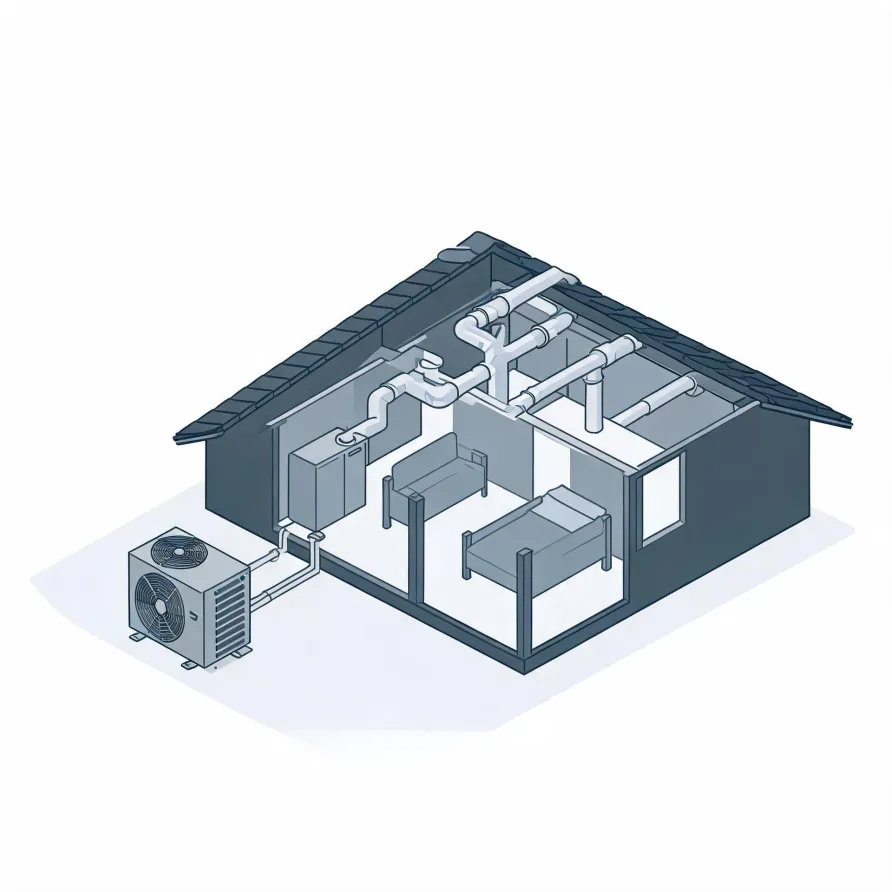
The outdoor unit sits on a pad outside the house and holds the compressor and condenser coil, which are the pieces a contractor reaches first when a heat pump stops heating or cooling. The compressor is the most-worked part in the system, and the condenser coil is where dirt and damage show up early. When either one is the problem, the symptoms tend to be the same: the system runs but the house stays the wrong temperature.
Inside the house, the air handler hangs in a closet, attic, or utility room and moves conditioned air through the home. It contains the evaporator coil and the blower motor, both of which a contractor inspects for refrigerant issues, restricted airflow, or wear. The reversing valve, which lives in the outdoor unit, is another piece a contractor checks when the system heats on one mode but not the other.
The drawing shows the general layout of a heat pump system, and a licensed contractor determines which pieces apply to your specific house and situation.
Get matched in Rio Arriba CountyRio Arriba County by the Numbers
193 severe weather events were recorded in Rio Arriba County, New Mexico between 2015 and 2024.
NOAA National Centers for Environmental Information, Storm Events Database, bulk CSV export, events 2015-01-01 through 2024-12-31.Half the homes in Rio Arriba County, New Mexico were built in 1984 or earlier (2020-2024 ACS 5-year).
U.S. Census Bureau, 2020-2024 American Community Survey 5-Year EstimatesRio Arriba County, New Mexico holds 19,862 housing units (2020-2024 ACS 5-year).
U.S. Census Bureau, 2020-2024 American Community Survey 5-Year EstimatesOwners occupy 80.0% of the occupied homes in Rio Arriba County, New Mexico (2020-2024 ACS 5-year).
U.S. Census Bureau, 2020-2024 American Community Survey 5-Year EstimatesCodes & Standards Behind Heat Pump Repair in Rio Arriba County, New Mexico2 sourced rules & standards
Licensing Rules for HVAC Repair in Rio Arriba County, New Mexico
New Mexico’s contractor licence does not reach casual, minor or inconsequential work taken one project at a time and totalling no more than seven thousand two hundred dollars ($7,200) a year — but the exemption has to be declared to the division, it is not automatic.
New Mexico requires a contractor licence classified for the work being done: no person may act as a contractor without one, and mechanical work falls to the division’s mechanical bureau.
Severe Weather Events in Rio Arriba County
Extreme weather puts heat pumps under sustained stress, and how hard a system works over time shapes when and how it fails. Repair needs in Rio Arriba County are tied directly to what the local climate demands of the equipment.
193 severe weather events, 2015–2024. Source: NOAA National Centers for Environmental Information, Storm Events Database.