Profile view of a bearded man wearing a dark green baseball cap and a dark gray T-shirt against a plain light background.

How long heat pumps last in New Mexico

Step 1 of 3: Equipment

A heat pump in New Mexico typically lasts 15 to 20 years, often longer than it would in a more humid state. Most of the wear on a heat pump comes from long cooling runs in summer heat and from the system switching between heating and cooling modes, and here the dry air puts less strain on the outdoor coil than it would somewhere humid. Since most homes in New Mexico heat with gas, the heat pump in many of these houses is doing cooling duty most of the year rather than carrying both jobs equally, which also eases the load on it. What still determines whether a given unit reaches 20 years or falls short at 12 is how well it was installed and how consistently it's been serviced. A unit sized wrong for the house, or one that's gone years without a tune-up, wears out its compressor well ahead of schedule. If your heat pump is approaching that range, it's worth having someone look at it before it fails outright.

An outdoor air conditioner condenser unit on a concrete pad beside a house with horizontal siding, with conduit, cables and an electrical box on the wall and mulch beds at either side.
Before you get your heat pump installation
A light gray outdoor heat pump unit mounted on a concrete pad beside a house with horizontal lap siding, with refrigerant lines and conduit running to a wall-mounted electrical box, gravel and a leafy shrub nearby.
After you get your heat pump installation

Why the dry heat helps

A heat pump moves heat instead of burning fuel for it, and that puts real hours on the compressor and the outdoor coil every time it runs. In a humid state, that coil has to fight moisture along with heat, which adds strain and shortens its life. New Mexico's dry air means the outdoor unit isn't working against condensation and humidity load the way it would in a place like Houston or Atlanta. Most homes here lean on gas for heat, so the heat pump's compressor spends more of the year idle than it would in a place running heat pump heating October through April. Less run time, less wear.

What actually ends the run

The 15 to 20 year range is a average, not a guarantee, and what moves a system toward the low end or the high end is usually the refrigerant charge and the condition of the outdoor coil. A low charge makes the compressor work harder to move the same amount of heat, and a coil caked with dust from a dry climate's blowing grit loses its ability to shed heat efficiently. Keeping the coil clean and the charge correct does more for a heat pump's lifespan in New Mexico than almost anything else, since the strain of summer cooling is what wears the compressor down first.

A gray-haired bearded man in a dark coat and scarf dusted with snow stands smiling in a dimly lit entryway with a white front door, a side table with a lit lamp, an oval mirror, and a patterned rug.
An older bearded man in a dark snow-dusted coat and gray scarf stands just inside a dimly lit home entry, with a framed picture, lit table lamp, and an adjoining room with a fireplace behind him, and snow visible through the open door.
A gray-haired, bearded man in a dark snow-dusted coat stands smiling in a dimly lit entry hall with a staircase, a lit table lamp, a framed picture, and a living room visible through a doorway.
An older man with gray hair and a beard, wearing a dark jacket dusted with snow, stands smiling in a dimly lit hallway with lamps and a living room visible behind him.

A heat pump that runs past 20 years is usually still on its original compressor, working in dry air that never made it fight moisture on top of heat.

One that fails early is usually the one that got ignored, not the one that got old. That's the difference a yearly checkup makes.

Power costs 14.85 cents per kilowatt-hour statewide

At 14.85 cents per kilowatt-hour, your heat pump's electric bill tracks pretty closely with how many hours it runs. A unit that's losing efficiency as it ages will start showing that in your power bill before it shows up as a breakdown.

EIA-861 2025 statewide residential average

Keeping the one you have running

A heat pump that's been maintained can get close to 20 years in New Mexico's dry air, but that doesn't happen on its own. The outdoor coil needs to stay clear of dust, the refrigerant charge needs to be right, and the reversing valve that switches it between heating and cooling needs to keep working cleanly. Skip that and a unit that could have run two decades starts losing efficiency in its teens, then fails outright. If yours is already past 15 years, the question isn't whether to watch it closely, it's whether the next repair is worth paying for at all.


Replacing one that's done

When a heat pump is done, it's usually done for good. A compressor that's worn out doesn't come back with a new part, and most homeowners find that out when the system quits in the middle of a hot afternoon or a cold morning. At that point the work is finding someone licensed to size and install a new system correctly, not just swap in whatever's on the truck. Getting matched with a contractor who knows New Mexico installations means you skip the calling around and the repeated explaining, and someone reaches out to you instead of the other way around.

A woman wrapped in a thick beige fleece blanket sits on a sofa with an open book on her lap, beside a lit table lamp, with a frost-covered window behind her.
A smiling older woman with gray hair in a cream knit sweater stands in a dimly lit kitchen beside a window showing snow outside, with a round loaf of bread on the counter in the foreground.

A heat pump pro near you

Skip the round of in-home estimates for a new heat pump.

You only hire the pro if you want to.

A gray outdoor condenser unit on a concrete pad beside a house with horizontal lap siding, with an electrical disconnect box and insulated refrigerant lines on the wall, gravel in the foreground and a planting bed at left.

Running clean

A heat pump kept clear of dust and grime like this pulls air through the coil the way it was designed to. The fins stay open, the unit doesn't work harder than it has to, and the compressor inside gets to live out its full years.

A weathered gray outdoor condenser unit sits on a concrete pad beside a house with horizontal siding, with refrigerant lines entering the wall at left and a mulched shrub bed at right.

Running dirty

Grime like this across the fins and base blocks airflow and makes the compressor work longer to move the same heat. Left this way through a few New Mexico summers, it's the kind of wear that cuts a unit's life short instead of letting it reach 20 years.

Why does your heat pump sound like it's working too hard

Stand near the outdoor unit on a hot afternoon. If it's running longer than it used to, cycling on again a few minutes after it shuts off, or putting out air that feels less cold than it did last summer, the compressor is working harder to do the same job. You might hear a rattle that wasn't there before, or notice the outdoor coil caked with dust from a dry summer. None of that means the unit is finished. It usually means the coil is dirty, the charge is off, or the reversing valve isn't switching clean. Left alone through another New Mexico summer, that strain is what turns a 20-year compressor into one that quits at 12.

  1. The indoor coil pulls heat out of the air inside your house.

  2. Refrigerant carries that heat out to the compressor.

  3. The compressor presses the refrigerant and sends it to the outdoor coil.

  4. The outdoor coil releases that heat into the outside air.

A man in a dark blue shirt stands in an open front doorway of a stucco and wood-clad house, facing a blond woman seen from behind in the foreground on a stone walkway.

15 to 20 years, sometimes more, if it's looked after

A heat pump in New Mexico's dry air has a real shot at 20 years. Whether yours gets there comes down to whether it's kept clean and checked on, not just the number stamped on it when it was installed. If yours is already past 15 and starting to run longer or sound strained, that's your sign to start paying attention rather than waiting for it to quit on you.

If you're at the point of weighing a repair against starting over with a new system, you don't have to work out which contractor to call, sit on hold, or explain your situation from scratch to three different companies before you can compare what they'd tell you. You can get matched with a contractor who installs heat pumps suited to your home, and have them reach out to you directly.

A living room corner with a beige sofa and cushion, a round wooden coffee table holding a pale ceramic vase of eucalyptus stems and a wooden bowl, and a curtained window with a potted plant above a latticed radiator cover in the background.
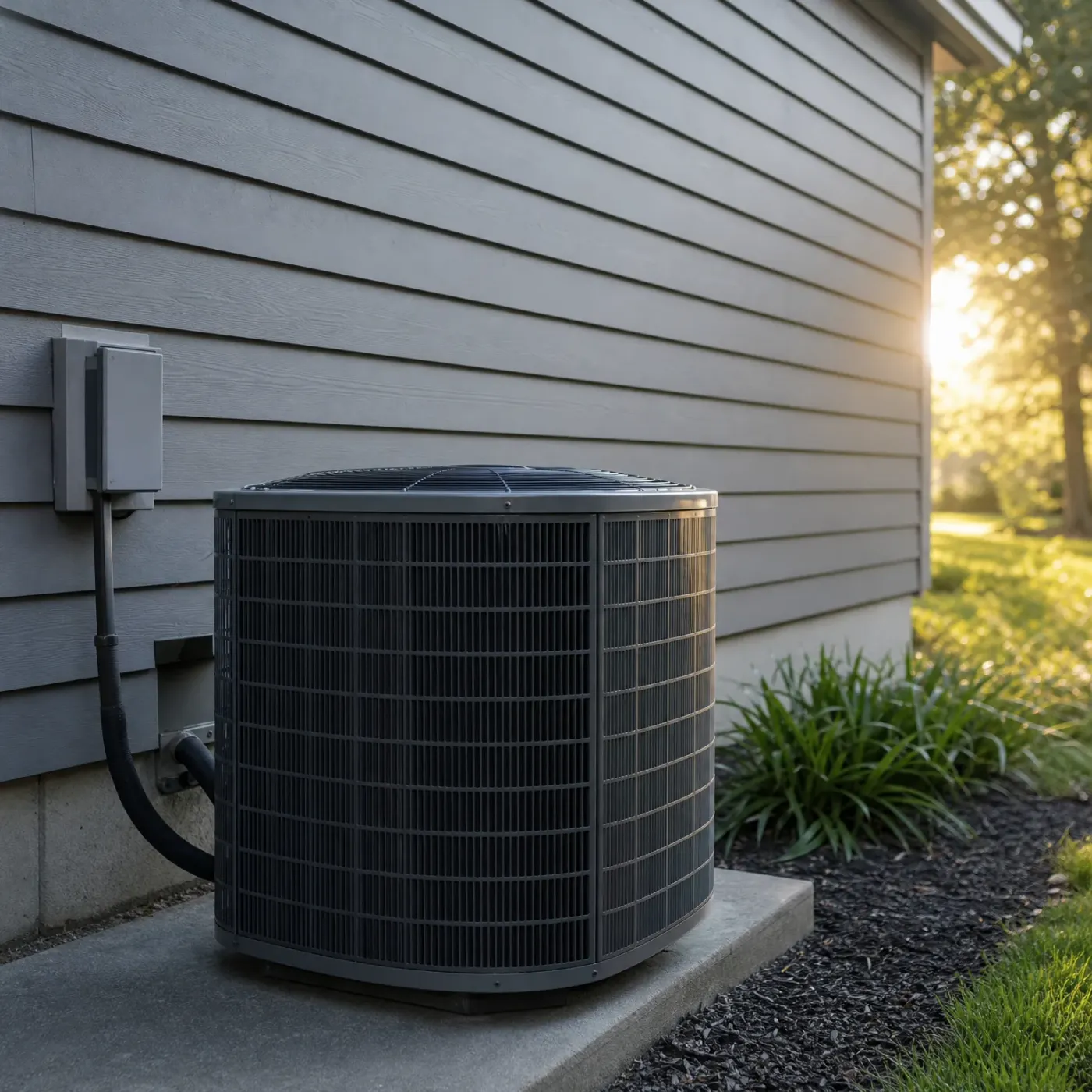
An outdoor air conditioner condenser unit on a concrete pad beside a gray horizontal-lap-sided house, with an electrical disconnect box and refrigerant line on the wall, grass, shrubs and a tree with low sun behind.

A local pro for your heat pump installation

Match me with a pro

Describe the project once instead of to every installer.

Asking costs nothing, and the choice to hire stays yours.