



New Mexico Heat Pump
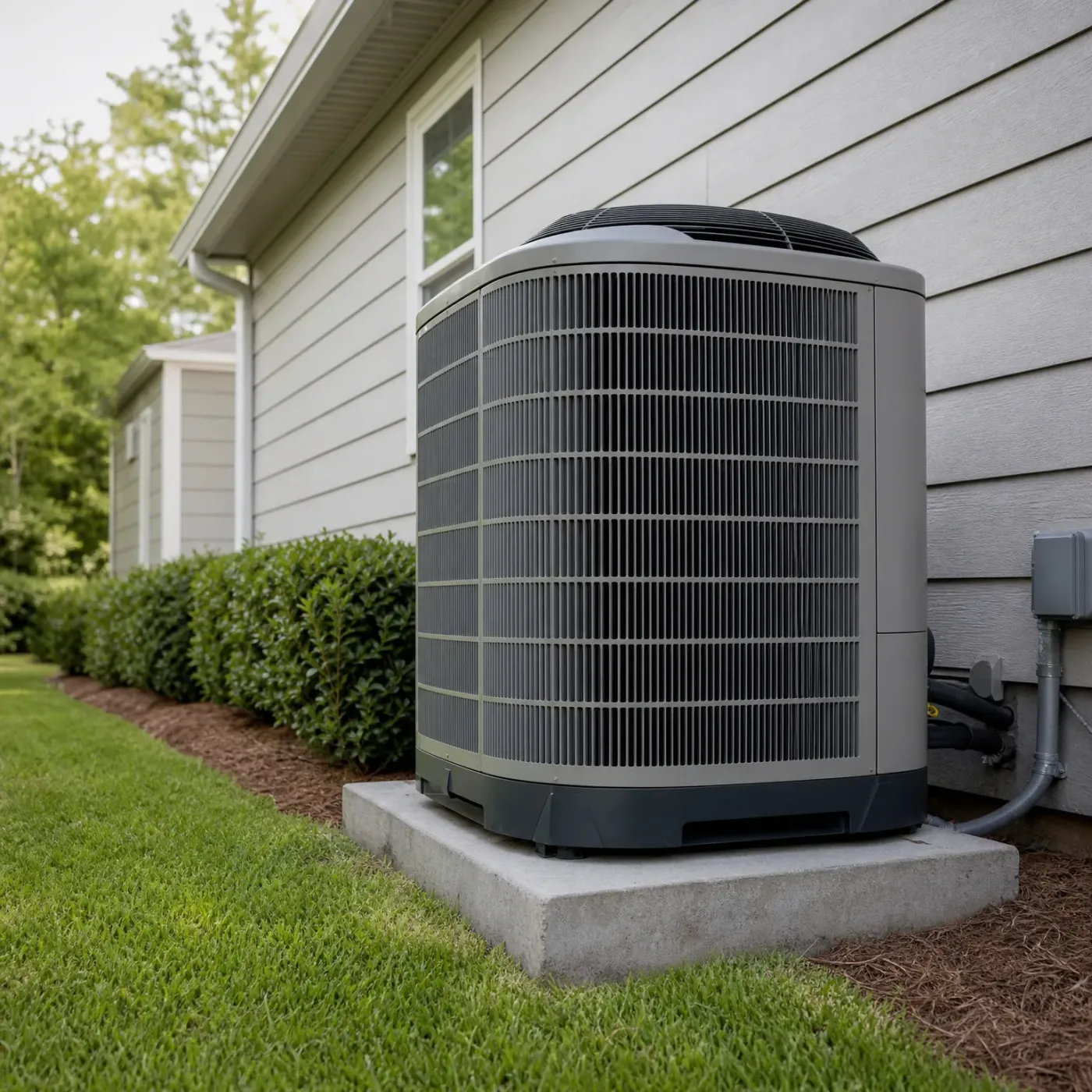
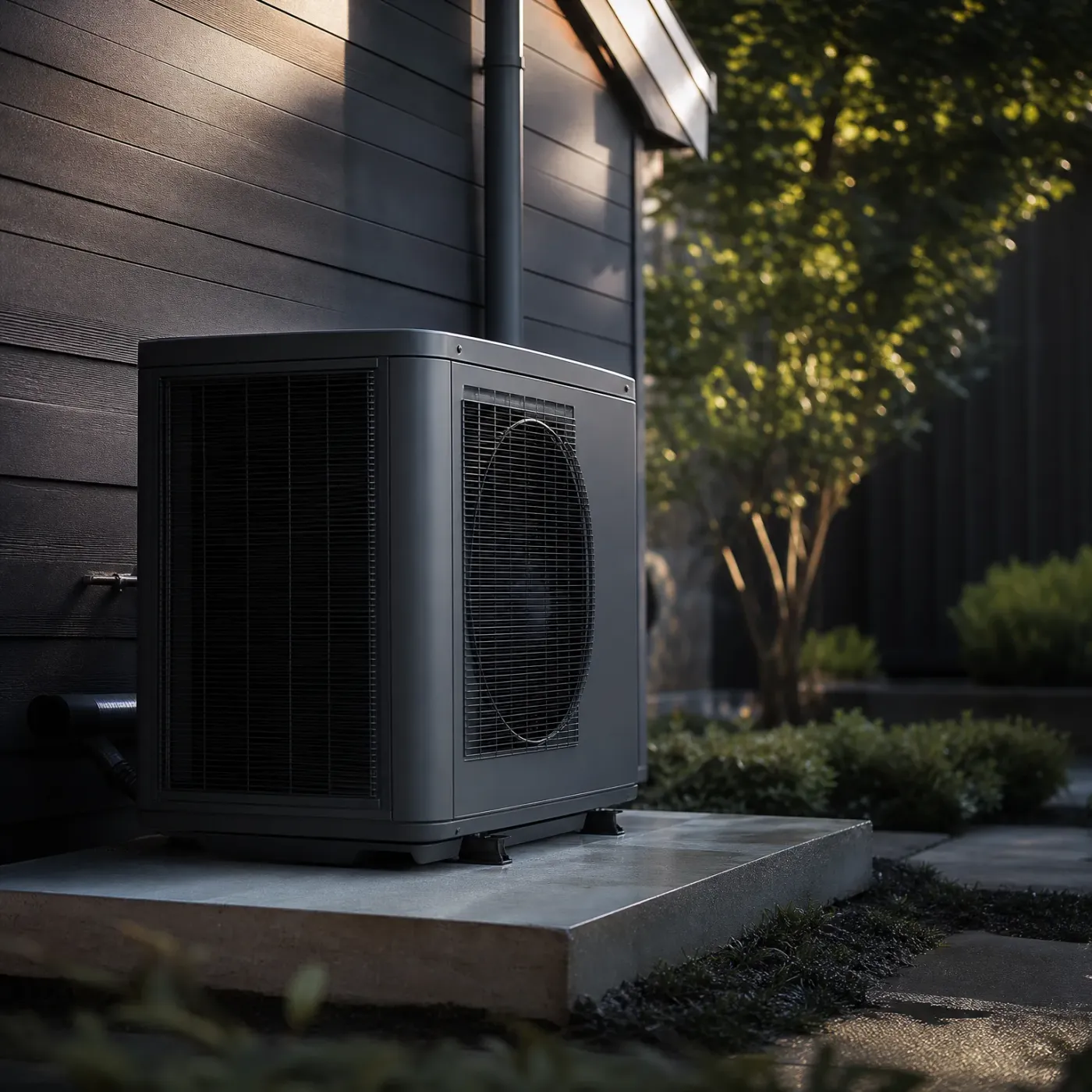
A gray outdoor condenser/heat pump unit with a side fan grille sits on a concrete pad beside a dark horizontal wood-sided house, with shrubs and a small tree nearby.

One request and it's handed off

What a heat pump tune-up covers in New Mexico

A heat pump tune-up covers the outdoor coil, the refrigerant charge, the reversing valve, and the electrical connections that carry the load when it switches between heating and cooling. In a place like New Mexico, where the unit runs hard through hot, dry summers, this page gets into what a tech actually checks and why. Send the form and let someone local who works on these units take it from there.

Hand it over

A heat pump tune-up means a technician checks the parts that let the system switch between cooling your home and heating it. That switch happens through the reversing valve, and it has to move cleanly both ways or the system struggles the moment you flip from AC to heat. The outdoor unit gets cleaned, since dust and dry debris collect on the coil over a long, dry summer and block airflow. The refrigerant charge gets checked, because a system low on refrigerant works harder and cools or heats less for the same power draw. Electrical connections get tightened, since a loose connection under load is a common reason a heat pump fails outright rather than just running poorly. For a system you count on through both July and January, catching a weak part in fall means it's fixed before you need heat, not after the first cold night tells you it failed.

A man in a gray sweater reclines in a brown leather armchair with his eyes closed, beside a wooden side table holding a mug, a folded newspaper and a potted plant, with a bookshelf and sunlit window behind him.
A man with greying hair and a dark sweater leans back on an armchair with his eyes closed and a slight smile, in a living room with a bookshelf, plant, folded newspaper and mug on a wooden table.
A man in a gray fleece jacket sits reclined in a leather chair with his eyes closed, in a room with bookshelves, a table lamp, a window, and a desk holding a folded newspaper and a dark mug.
A bearded man in a gray fleece pullover sits with eyes closed in a brown leather armchair in a living room, with a floor lamp, bookshelf, potted plants, a side table holding newspapers and a dark mug, and a bright window behind him.

What the outdoor coil goes through

Your outdoor unit sits in direct sun through a New Mexico summer, running long hours to keep the house cool in dry heat. Dust and grit blow across the coil fins all year, and without rain to rinse them off the way wetter climates get, that buildup stays put. A dirty coil can't shed heat the way it should, so the system works harder to do the same job. A tune-up includes cleaning the coil and straightening any bent fins, which is part of why the technician checks it every visit rather than skipping it when things seem fine.


Why the reversing valve matters here

Most homes in New Mexico heat with gas, so a heat pump here is likely doing cooling duty most of the year and switching to heat only part of the time. That uneven use means the reversing valve sits idle for long stretches, and a valve that doesn't move can seize or stick when you finally call for heat on a cold morning. A tune-up tests the valve by cycling it both directions, not just checking that it's there. Catching a sluggish valve in fall, before you need heat, means the switch works when you actually ask it to.

An outdoor air conditioner condenser unit on a concrete pad beside a house with beige horizontal siding, with conduit running from an electrical box on the wall.
Before you get your heat pump maintenance
A gray outdoor heat pump unit on a concrete pad beside a house with horizontal lap siding, connected by conduit and a flexible line to a wall-mounted disconnect box, with low shrubs and mulch nearby.
After you get your heat pump maintenance

A heat pump has to reverse itself to switch from cooling to heating, and that work falls on a few specific parts. The reversing valve moves on a solenoid, and if that solenoid has weakened, the valve can stick instead of switching clean. Refrigerant gets checked on both sides, high and low, since a heat pump running low on charge loses capacity whichever direction it's working. Through a New Mexico winter, the defrost board has to sense frost on the outdoor coil and reverse the system briefly to clear it, so that sensor gets tested too. At the contactor and the dual run capacitor, a technician looks for a weak connection, because a capacitor that's lost strength makes the compressor strain every time it starts. Where your system has auxiliary heat strips for the coldest mornings, those get run and tested on their own, separate from the heat pump itself. Airflow across the indoor coil matters more than it looks, since restricted air pushes the reversing valve against pressure it wasn't built to hold.

What gets tested and why

  • A technician checks the reversing valve's solenoid, since a coil that's lost its magnetism can leave the valve stuck in one position.
  • Refrigerant pressure gets checked on both the high and low side, because a heat pump that's low on charge loses capacity in both directions.
  • The defrost control board and its sensor get tested, since that's what tells the unit to reverse briefly and melt frost off the outdoor coil in winter.
  • Electrical connections at the contactor and the dual run capacitor get checked, because a weak capacitor makes the compressor work harder to start.
  • The auxiliary heat strips, where your system has them, get tested separately, since they only kick in when the heat pump can't keep up on the coldest mornings.
  • Airflow across the indoor coil gets measured, because restricted airflow forces the reversing valve to work against pressure it wasn't built to handle.
A gray outdoor heat pump unit on a concrete pad beside a house with horizontal lap siding, with a conduit running to a wall-mounted disconnect box and a green shrub to the left.
A clean coil like this one lets the unit pull heat out of the air without straining, keeping power use where it should be.
An outdoor air conditioner condenser unit on a concrete pad beside a house with horizontal vinyl siding, with refrigerant lines and an electrical disconnect box on the wall and dry leaves on the ground.
A coil caked with dirt and leaves makes the unit work harder for less heat, and that shows up on next winter's bill.
An older man with gray hair and a navy knit sweater sits in an armchair with his eyes closed, near a bright window with potted green plants.
A woman in a cream knit sweater sits in an armchair indoors, eyes closed and smiling, beside a window showing yellow and orange autumn foliage, with a mug on a wooden side table and shelves holding vases behind her.
An outdoor condenser unit on a concrete pad beside a light-colored lap-sided house, with a trimmed hedge, mulch bed and mowed lawn nearby and an electrical box and conduit on the wall.

Done looking for a heat pump pro

A licensed local pro takes the request for your heat pump tune-up.

Send the form, and lining up the heat pump tune-up stops being yours to chase.

Reach a local pro

You only hire the pro if you want to.

What does a heat pump tune-up actually check during defrost mode?

You want to know if the tune-up actually tests the system doing the thing you notice most in winter, the outdoor unit frosting up and then clearing itself. Defrost is the part of a heat pump that looks the most like something going wrong, so you want to know a technician is actually watching it happen rather than just checking the unit while it sits idle.

A technician forces a defrost cycle and watches the outdoor unit clear itself

A heat pump goes into defrost when frost builds up on the outdoor coil, which happens on its own through a New Mexico winter once temperatures drop toward freezing overnight. The system briefly reverses, sends heat outside to melt the frost, and the outdoor fan stops while that happens. During a tune-up, a technician triggers that cycle directly instead of waiting for the weather to cause it, then checks that the defrost sensor reads the coil temperature correctly and that the control board ends the cycle once the coil is clear. A board that holds the cycle too long sends unwanted cold air through your vents; one that ends too early leaves frost behind to build up again by morning.

A gray outdoor condenser unit on a concrete pad beside a house with horizontal lap siding, with a wall-mounted disconnect box, conduit and insulated refrigerant lines, a shrub at left and gravel at right.

Running clean

This is what a maintained heat pump looks like outside your house: coil clear, lines intact, disconnect box secure. It cycles between cooling and heating without hesitation, because the reversing valve and the connections feeding it have been checked before the weather asked anything hard of them.

An outdoor condenser unit on a concrete pad beside a horizontal-sided house, with insulated refrigerant lines running to a wall-mounted box, surrounded by bare dirt.

Running neglected

This unit has sat through summers and winters without anyone opening it up. The casing shows it. Inside, a weak contactor or a dirty coil usually shows up first as a system that runs longer to do the same job, then as a system that stops doing the job at all.

Power costs 14.85 cents per kilowatt-hour statewide

At 14.85 cents a kilowatt-hour, every bit of strain on your heat pump shows up on the bill fast, since it runs on electricity alone for both heating and cooling. A clean coil and correct charge keep it pulling heat and cold efficiently instead of burning extra power to make up for dirt or a weak charge.

EIA-861 2025 statewide residential average

What a Tune-Up Settles

  • A heat pump tune-up checks the reversing valve, the refrigerant charge, the outdoor coil, and the electrical connections that let the system switch between cooling and heating.
  • A dirty coil or a low charge shows up as a weaker system now and a higher bill once you're running the heat full-time.
  • Catching a sluggish reversing valve or a worn connection before winter means you're not finding out about it the first cold morning you switch over.
  • A local contractor who services heat pumps all season already knows which parts in a New Mexico summer tend to go first.
  • Your request goes to one contractor, not several, so you're not sorting through a pile of calls to find someone who actually works on this equipment.

A heat pump tune-up comes down to four things: the reversing valve, the refrigerant charge, the outdoor coil, and the connections that carry the load when the system switches modes. Any one of those off and you feel it, either as a system that won't keep up or a bill that climbs once you're running heat through the winter. Checking it now, before the first cold morning, means you find out about a sluggish valve or a worn connection on your schedule, not when you need heat and don't have it.

That matters more when the person doing the check already knows this equipment in this state. A contractor who services heat pumps all season in New Mexico has seen what the summer heat and dry grit do to an outdoor coil, and knows which parts tend to wear first here. That's not guesswork on their part. It's the same checks, on the same kind of unit, season after season.

Your request goes to one contractor, not a handful. That means no sorting through calls from companies that don't know your equipment or your area, just one local contractor who does. You'll know your heat pump is ready for the switch to heating, and you'll know who checked it.

An outdoor air-source heat pump unit with a large fan grille stands on a concrete pad beside a dark horizontal-slat clad house wall, bordered by gravel, grass and an ornamental grass clump.

It's off your list after this

Your request goes to one pro, not a list of companies.

Step 1 of 3: Equipment