A local installer who puts in heat pumps gets your project.
A heat pump that's sized wrong fights your house every day it runs. Too big and it cools the air fast, then shuts off before it pulls the moisture out, so your house feels clammy even on a dry New Mexico afternoon. Too small and it runs hour after hour in July and August trying to catch up, and in the shoulder months it struggles again when it has to make up for the gas furnace it's paired with.
Getting the number right means a load calculation on your actual house, your square footage, your windows, your insulation, how much shade your walls get. Nobody can hand you a correct size without that work, and no two homes on the same street need the same ton rating.
That's the part a contractor handles when they come look at your place. What you're deciding here is whether you want to spend your week calling around New Mexico, explaining your house to five different companies, waiting on five quotes, and trying to judge which installer actually did the math versus which one guessed based on your square footage alone.
Or you can skip that. Tell us what you're working with and you get matched with a contractor suited to your situation, one who installs heat pumps sized for homes like yours and who will reach out to you directly. No more repeating your address and your system details to a new voice every time you pick up the phone.
The load calculation still has to happen. The quote still has to get written. But the part where you hunt for someone qualified to do either of those things, that part is done once you fill out the form below.
What size heat pump do I need for my house in New Mexico?
You want a straight answer before anyone comes out to look at your place. Square footage alone won't tell you the right size, and a wrong guess either leaves your house muggy in July or runs up your bill all summer. What settles it is a load calculation done for your actual house, not a rule of thumb off the square footage on your tax record.
The right size comes from a load calculation, not your square footage
There's no chart that gives you the right tonnage from square footage alone. A contractor figures it using a Manual J load calculation, which looks at your insulation, your windows, how much sun your walls and roof take on, and the layout of your house. Two homes the same size in the same New Mexico neighborhood can need different sized units. The dry heat here raises the stakes on getting this right: an oversized heat pump cools the air quickly and shuts off before it pulls the humidity out, so the house feels clammy even on a dry afternoon. An undersized one runs for hours straight trying to keep up on the hottest days and still falls behind.
Is your heat pump actually right for your house?
You might already know something's off. The unit short-cycles, kicking on and off every few minutes instead of running a steady stretch. Or it runs almost nonstop on a hot afternoon and the house still feels warm near the windows. Some rooms stay cooler than others no matter where you set the thermostat. You notice the power bill creeping up without the summer feeling any hotter than last year's. A heat pump that's the wrong size also wears out faster, since constant starting and stopping strains the compressor more than steady operation does. If your system came with the house, there's a good chance nobody checked whether it was sized for this house at all.
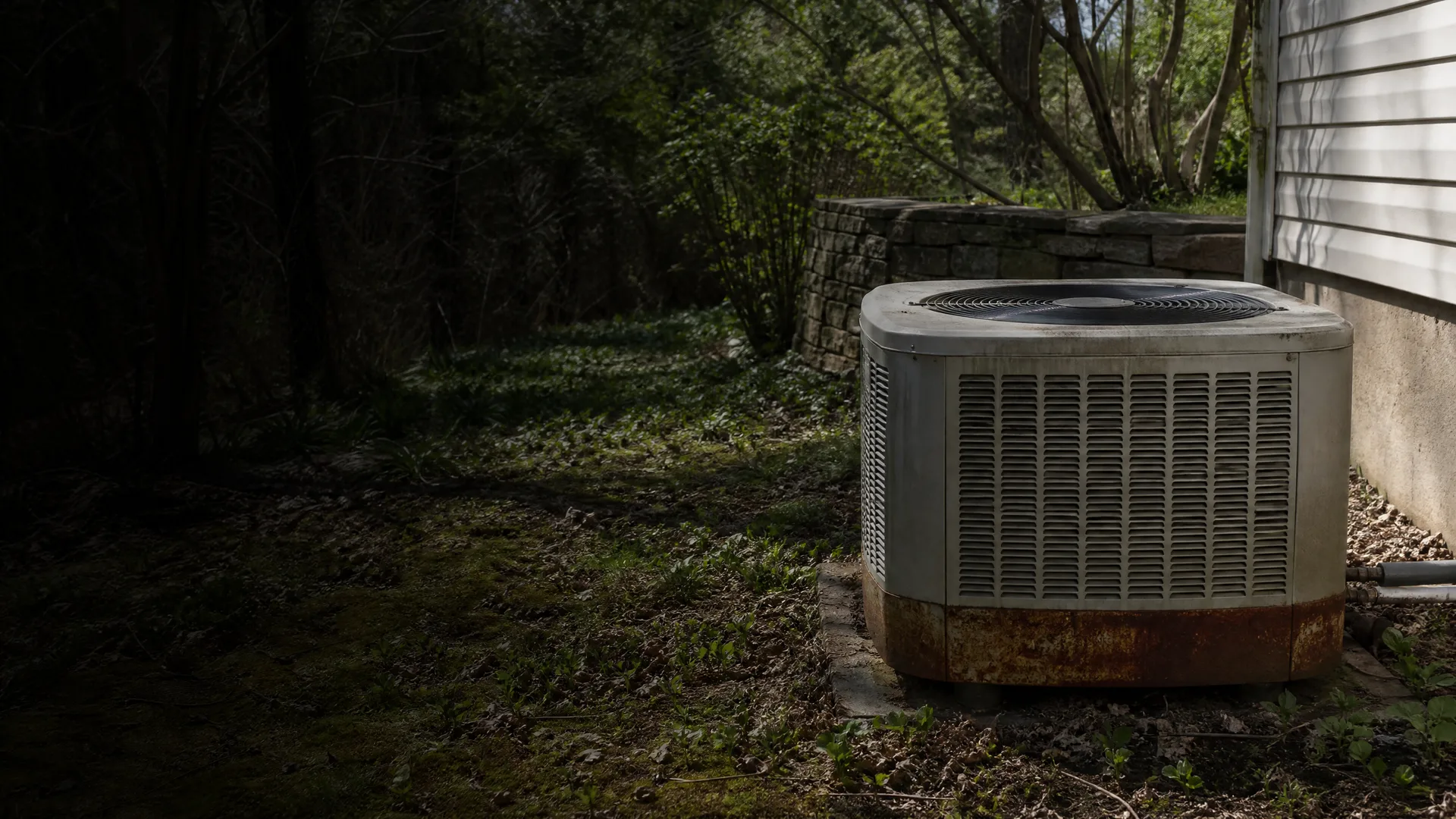
You're out pulling weeds along the side yard when you stop at the outdoor unit. It's a spring morning, still cool, the kind of day before the real heat sets in across New Mexico. You crouch down and notice the rust creeping up the base, flaking where the metal meets the concrete pad. The fan looks fine. The lines look fine. It's just that rust, low and spreading, like it's been sitting in water that never fully dries out. You run a thumb over it and some flakes off onto the ground. You straighten up, look at the house, and think about how this same unit has to carry the whole place through summer again in a few months.
Too Big or Too Small
Oversized
Cools the house fast, then shuts off before it pulls the humidity down, so the air feels clammy even in dry New Mexico heat.
Cycles on and off more often, which puts more wear on the compressor over the life of the unit.
Costs more to install than the size your house actually needs.
Can leave rooms far from the unit uneven, since short runs don't give air time to spread through the ductwork.
Hits its target temperature quickly but spends more of the day starting and stopping than running steady.
Undersized
Runs for long stretches on a hot afternoon and still can't keep the house at the temperature you set it to.
Puts constant load on the compressor, since it rarely gets to shut off and rest during the hottest part of the day.
Struggles most in January and February when it has to work against the cold on the other side of the system.
Leaves the thermostat reading higher than you'd like no matter how long the unit runs.
Pushes the power bill up as the unit works longer hours to make up for what it can't deliver in capacity.
Running the way it should
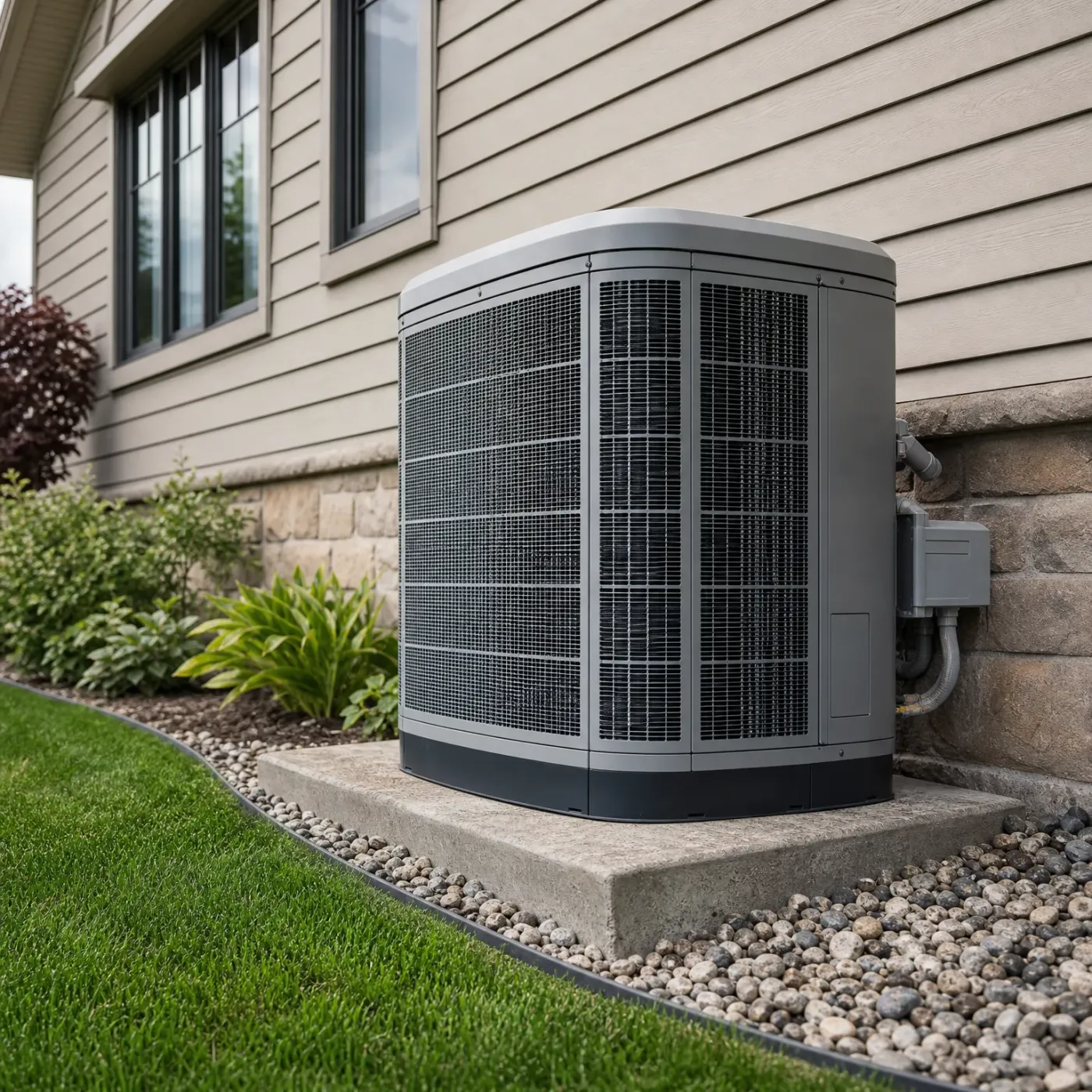
This unit sits clean on its pad, coil fins clear, plenty of room around it on both sides. Air moves through it the way it was designed to. In the dry New Mexico heat, that matters more than people think, since a clogged unit struggles to pull heat out of the air at all.
Choked and working harder for it
Look at the fins on this one, packed with dirt and debris. The compressor inside is pulling more current to push air through a coil that's half blocked. Even a heat pump sized right for your house can't do its job when it can't breathe, and the wear adds up long before summer's over.
Before you get your heat pump installationAfter you get your heat pump installation
Get the right pro for your heat pump
Skip collecting and comparing quotes for the new heat pump.
Get in touch with a local installer about a new heat pump.
It costs nothing to send, and you don't have to hire anyone.
The number a contractor needs is called Manual J
A heat pump's size is measured in tons, and a ton has nothing to do with weight. It's a unit of cooling capacity, and most houses fall somewhere between two and five tons. Getting to the right number means a room by room load calculation called a Manual J, which factors in your square footage, your insulation, how many windows you have and which way they face, your ceiling height, even how much shade your house gets in the afternoon. Two houses the same size can need different sized units once all that's counted up.
This is the part that's easy to skip and expensive to skip wrong. A contractor who walks your rooms and runs the numbers will land on a size that fits your house, not a rule of thumb. That's the match this page can set up: someone local who does the calculation instead of guessing off square footage, and who already knows what New Mexico's dry heat and the gas furnace most homes pair with mean for the equipment going in.
New Mexico's summer air holds a dew point around 45°F, according to NOAA climate normals, which is dry enough that sweat and water on a coil give up moisture fast. That works in your favor if your heat pump is sized right, since a properly sized unit can finish pulling the humidity down in the time it takes to cool the room. But an oversized unit skips past that entirely. It drops the temperature and shuts off before it runs long enough to matter, so even with air this dry, you can still end up with a house that feels damp when the unit's size is wrong.
NASA POWER T2MDEW county cells weighted by homes
Why Manual J beats a rule of thumb
A lot of guesses use a flat number, something like 500 square feet per ton, and call it done. That number doesn't know if your attic has enough insulation, which way your windows face, or how many people come through your front door on a given day. Manual J does. It walks through your walls, your windows, your ceiling, and the heat your house picks up sitting under the New Mexico sun all afternoon. Two houses the same size down the street from each other can land a full ton apart once that math is done, and installing off the wrong number means living with the result for the life of the unit.
What a mismatched ton actually costs you
Go a ton over and the compressor short-cycles, shutting off before it finishes pulling moisture out of the air, so the house feels damp even when it's bone dry outside. Go a ton under and the unit runs flat out on the hottest afternoons and still loses ground, with the compressor working harder than it was built to for years at a time. Either way, you paid for capacity you're not getting the benefit of. The right ton number, the one a contractor gets from doing the load calculation rather than eyeballing the square footage, is what keeps the unit working the way it's supposed to from the first summer on.
Power costs 14.85 cents per kilowatt-hour statewide
At 14.85 cents a kilowatt-hour, every ton your heat pump runs oversized shows up on the bill each month it cools or heats. Get the size right and you're paying for only the capacity your house actually needs, not extra tons sitting idle or straining to keep up.
EIA-861 2025 statewide residential average
The right size for your heat pump comes from your house, not a chart, and the only way to get there is a Manual J calculation done by someone who will actually measure your windows, your insulation, and your square footage. Guessing costs you comfort or money every season after. You could spend the next few weeks calling around New Mexico, asking each contractor the same questions about tonnage and Manual J, comparing quotes that use different assumptions, and still not know who actually ran the numbers right. Or you can skip that part. Getting matched with a contractor who handles sizing correctly means you explain your house once, not five times, and you're not stuck sorting through quotes to guess which one took the job seriously. You already know your place is worth doing right. The sizing question has a real answer, specific to your home, and someone can get you there without you doing the legwork of finding them yourself.