


The coil clear, the grille clean
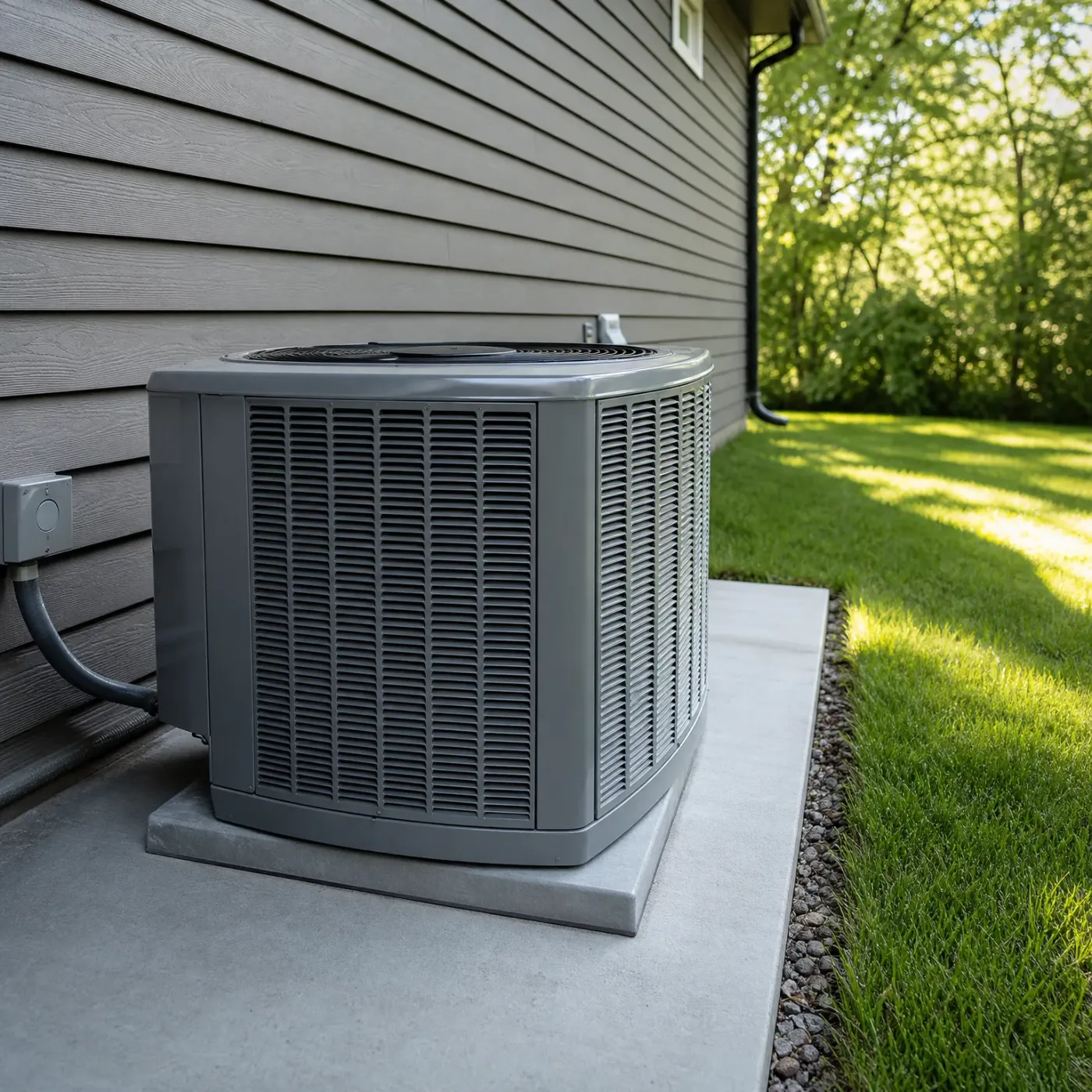
This is a heat pump pulling air through without a fight. The coil fins are open and the grille is free of dust, so it can move the air it needs to finish a full cycle before it shuts off on its own.
You catch it running a few minutes, shutting off, then kicking back on again before the house feels any different. It is the kind of thing you want to look at before it turns into a bigger repair. You are not sure if it is the thermostat, something with the outdoor unit, or just how the system behaves in New Mexico's dry heat.
Short cycling means the heat pump is shutting off before it has run long enough to actually cool the house, then starting again a few minutes later. A dirty air filter, a failing capacitor, or low refrigerant charge are the usual reasons it trips off early. The outdoor unit can also overheat when it's pulling hard against New Mexico's dry summer heat, especially if the coil is dirty or airflow is blocked. Each time it short cycles, the compressor takes a hard restart, and that wears on it faster than a normal run cycle would. Catching this early matters, because a unit that keeps short cycling is working harder for less cooling and heading toward a bigger failure if the cause isn't found.

If the heat pump is too big for the house, it satisfies the thermostat fast and shuts off before it has run long enough to do the job right. A unit sized correctly for your house runs longer stretches and holds steady. This matters more with a heat pump than a gas furnace, since in New Mexico's dry summer heat the outdoor coil needs real runtime to move heat efficiently.

A heat pump low on refrigerant can trip its safety switches early, shutting the compressor down before the cycle finishes. It then restarts once pressures settle, only to trip again. This looks the same from inside the house as a thermostat problem, but it is a sealed system issue, and running it this way for long stretches puts wear on the compressor that a quick repair now avoids.

A heat pump that keeps shutting off early never runs long enough to pull the moisture out of the air or hold a room at the temperature you set. In a dry New Mexico summer that matters less for humidity and more for the bill. Every restart draws a jolt of power to get the compressor moving again, and with the unit cycling every few minutes all day, that adds up on a system that's working harder than it should for the same result.
Left alone, the stop-start strain wears on the compressor itself, which is the expensive part to replace. You already catch small problems before they turn into big ones, and this is one of them. Rather than spend an afternoon calling around and describing the same symptoms to every shop in town, you can get matched with a contractor who handles heat pumps like yours and have them reach out to you directly.

Short cycling runs up the clock on your compressor, not just the thermostat. At 14.85 cents per kilowatt-hour, those extra starts add up on a bill that's already working through a hot New Mexico summer, even before the repair gets made.
EIA-861 2025 statewide residential average




Fill out one short form instead of calling around.
It costs nothing to send, and you don't have to hire anyone.
The thermostat calls, and the compressor kicks on to start a cycle.
Refrigerant pressure spikes fast if the charge or airflow is off.
A safety switch senses that spike and shuts the compressor down.
The thermostat sees an unmet temperature and calls again within minutes.


A heat pump doesn't just decide to shut off. Something trips a safety switch, and that switch is doing its job correctly even when the real problem is somewhere else. Dirt on the outdoor coil or a filter that's overdue chokes airflow, and head pressure climbs until the high pressure switch cuts the compressor. Low refrigerant charge works the other direction, dropping suction pressure until the low pressure switch does the same thing. A run capacitor that's weakening can't hold the compressor motor steady under load, so the motor strains and trips its own overload protection. None of that needs a thermostat problem to happen, but a bad sensor reading will shut things down too, telling the system the house is comfortable when it isn't. A reversing valve stuck between modes throws off the pressures those safety switches are built to watch. And sometimes it's simpler than any of that: a loose or corroded connection at the contactor drops power to the compressor mid cycle, then restores it once contact is remade, and the cycling looks electrical because it is.



This is a heat pump pulling air through without a fight. The coil fins are open and the grille is free of dust, so it can move the air it needs to finish a full cycle before it shuts off on its own.

Here the fins are dark and packed with debris. Air can't get through like it should, pressure climbs faster than it ought to, and a safety switch cuts the compressor short before the cycle is done.



New Mexico air doesn't hold much moisture. Averaged across June, July and August, the dew point here runs 45°F, according to NOAA climate data, which is dry air by any measure. That matters for a heat pump that's already short cycling, because dry air lets it get away with less run time without anyone feeling it in the house right away. You won't notice the clammy, sticky air that gives away a struggling system in a humid state. What you'll notice instead is the temperature drifting off what you set, and the unit kicking on and off more than it should, with nothing in the air to tip you off sooner.
NASA POWER T2MDEW county cells weighted by homes
A heat pump that keeps shutting off early is telling you something specific: a safety switch is tripping because pressure or airflow isn't where it should be. That could be an oversized unit, a dirty coil, a clogged filter, or a low charge, and the fix depends on which one it is. What doesn't help is guessing. You could spend an afternoon calling around New Mexico for a contractor licensed to work on heat pumps, explaining the short cycling to each one, then sitting with a stack of quotes trying to sort out who actually knows what they're doing. That's the part that goes away here. You get matched with a contractor who handles this kind of repair, and they reach out to you. The short cycling itself still needs a real diagnosis, a gauge on the refrigerant, a look at the coil and filter, a check on whether the unit was ever sized right for your house. But you won't be the one tracking down who can do it.
Explain the job once and skip repeating it on every call.
No charge to send it. You decide if you hire them.