Tell us about the job
Takes about a minute. No obligation.
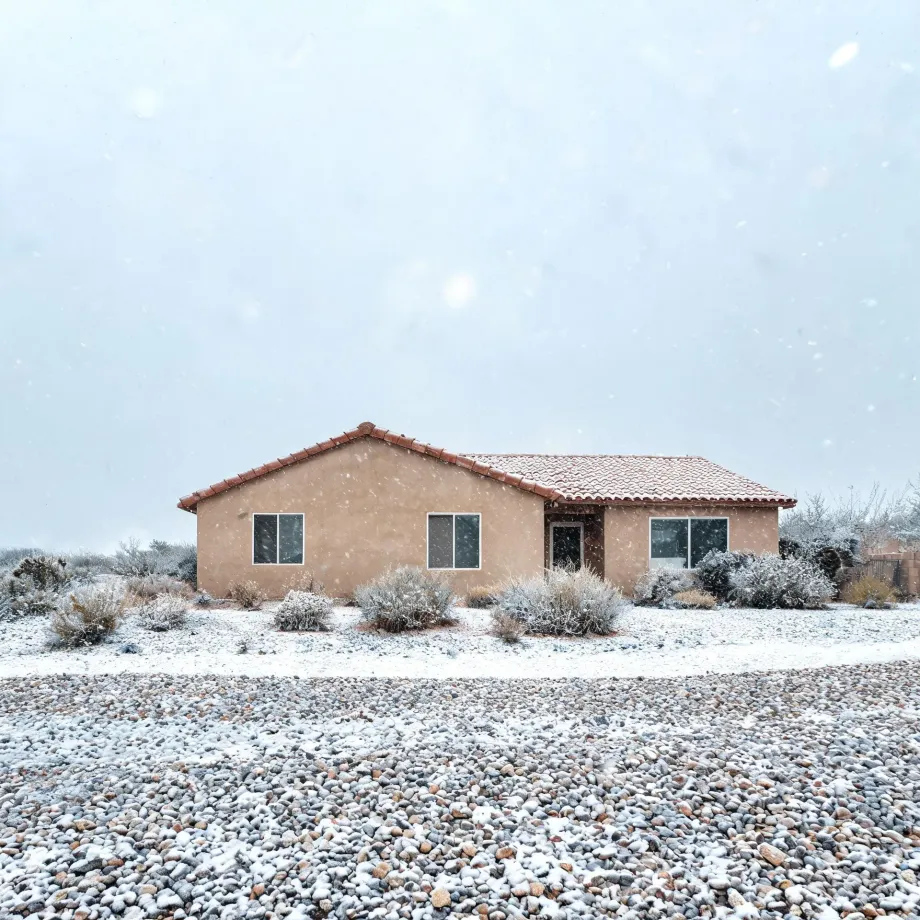
Sizing a heat pump for McKinley County requires a contractor to work through what happens to the unit's heating output as outdoor temperatures fall, because a system that looks adequate on paper can fall short on the coldest nights and force its backup heat into near-constant use. Homes in McKinley County, NM run heat about eight months a year, from October through May. The compressor carries the heaviest share of that load, cycling through heating demand across a long stretch of cold months, and a unit that was undersized at installation shows the strain in its compressor and reversing valve before anything else. A contractor quoting a replacement here has to run a proper load calculation and confirm what auxiliary heat the house needs, not treat those as secondary questions.
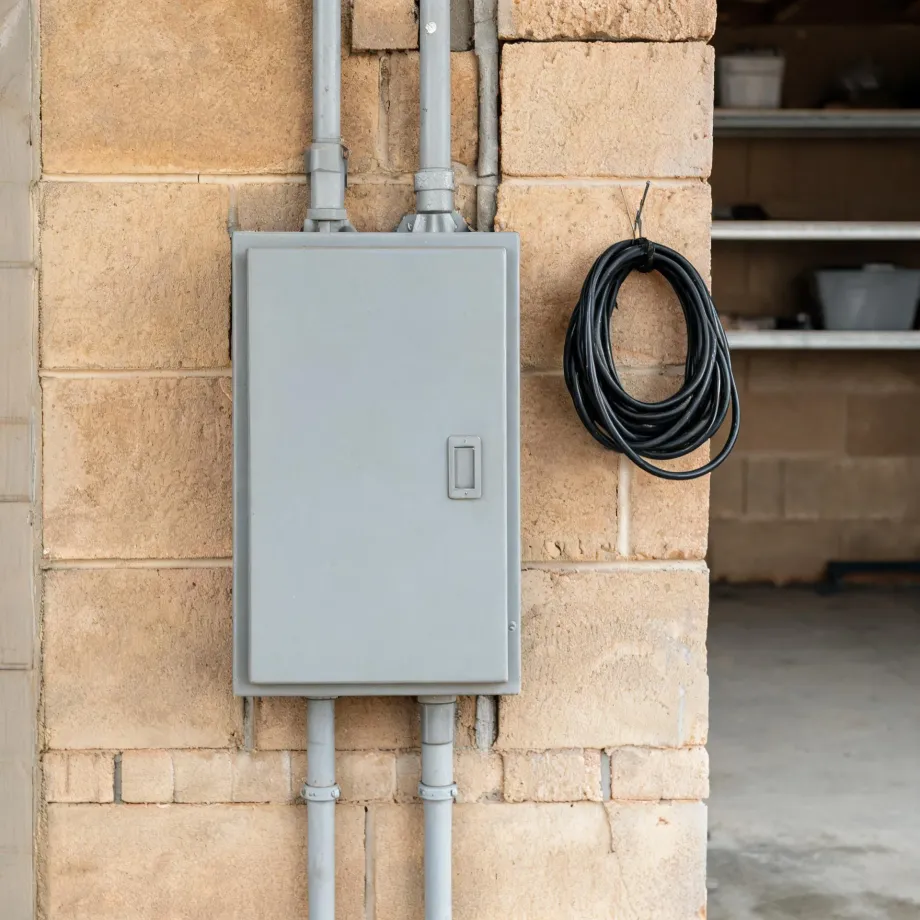
Ductwork and electrical service in older housing stock were built around whatever was running at the time, and a heat pump places demands on both that the original builders had no reason to plan for. Half the homes in McKinley County, New Mexico were built in 1985 or earlier (2020-2024 ACS 5-year). That vintage of construction routinely carries service panels sized for lighter loads, and a contractor pricing a heat pump installation has to check the panel before the equipment selection goes anywhere. If the existing service cannot carry the new draw, the electrical upgrade lands on the same quote as the unit itself.
What a Heat Pump Installation Puts in Your Home
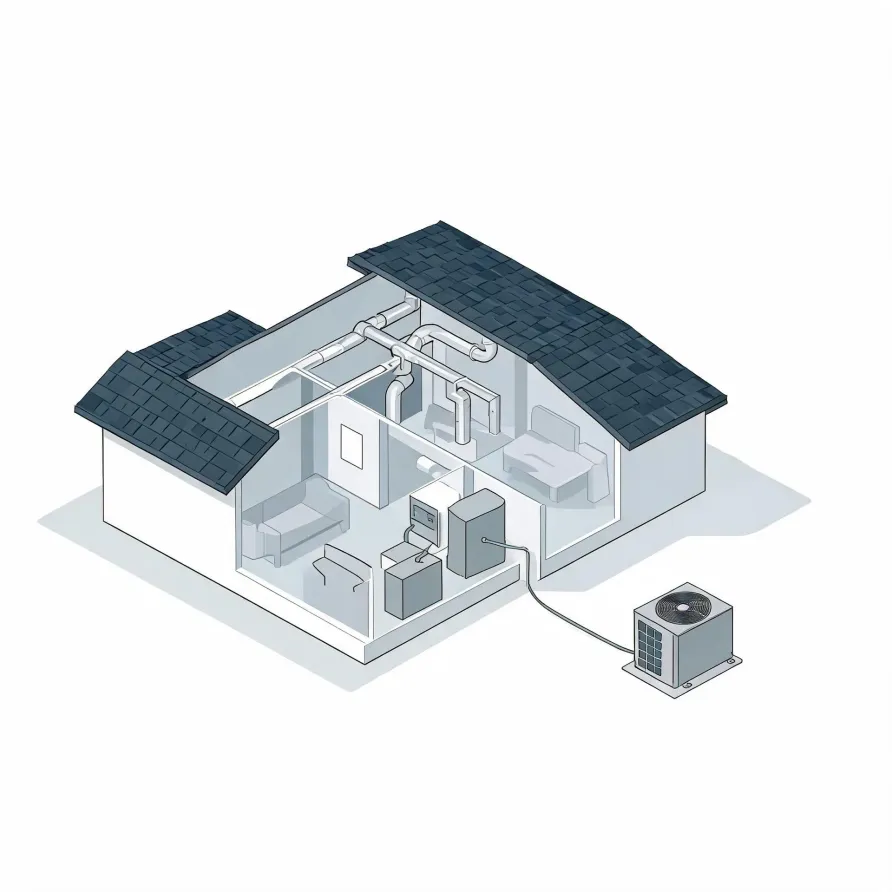
The outdoor unit sits on a pad beside the house and holds the compressor and the main coil. The indoor air handler mounts inside, most often in a utility closet or a mechanical room, and moves conditioned air through the home. These two units are the core of what a contractor sets in place.
A pair of refrigerant lines run between the outdoor unit and the air handler, carrying the working fluid that lets the two sides act as one system. A thermostat goes on an interior wall and gives the homeowner control over the whole setup. Where a home has no existing ductwork, the contractor fits wall-mounted or ceiling cassette heads in each room instead of a central air handler.
The drawing beside this text shows a typical layout, and a licensed contractor determines exactly how that layout fits the structure and existing systems of your home.
Get matched in McKinley CountyMcKinley County, by the numbers
114 severe weather events were recorded in McKinley County, New Mexico between 2015 and 2024.
NOAA National Centers for Environmental Information, Storm Events Database, bulk CSV export, events 2015-01-01 through 2024-12-31.Half the homes in McKinley County, New Mexico were built in 1985 or earlier (2020-2024 ACS 5-year).
U.S. Census Bureau, 2020-2024 American Community Survey 5-Year EstimatesMcKinley County, New Mexico holds 25,304 housing units (2020-2024 ACS 5-year).
U.S. Census Bureau, 2020-2024 American Community Survey 5-Year EstimatesOwners occupy 69.8% of the occupied homes in McKinley County, New Mexico (2020-2024 ACS 5-year).
U.S. Census Bureau, 2020-2024 American Community Survey 5-Year EstimatesHeat Pump Installation Rules for McKinley County, New Mexico2 sourced standards and codes
Licensing Rules for McKinley County, New Mexico
New Mexico’s contractor licence does not reach casual, minor or inconsequential work taken one project at a time and totalling no more than seven thousand two hundred dollars ($7,200) a year — but the exemption has to be declared to the division, it is not automatic.
New Mexico requires a contractor licence classified for the work being done: no person may act as a contractor without one, and mechanical work falls to the division’s mechanical bureau.
Severe Weather Events in McKinley County
Extreme weather puts a direct load on heating and cooling equipment, shortening cycles, straining components, and widening the gap between a system that was sized right and one that was not. How often that pressure arrives in McKinley County shapes what a heat pump installation here needs to handle.
114 severe weather events, 2015–2024. Source: NOAA National Centers for Environmental Information, Storm Events Database.