Tell us about the job
Takes about a minute. No obligation.
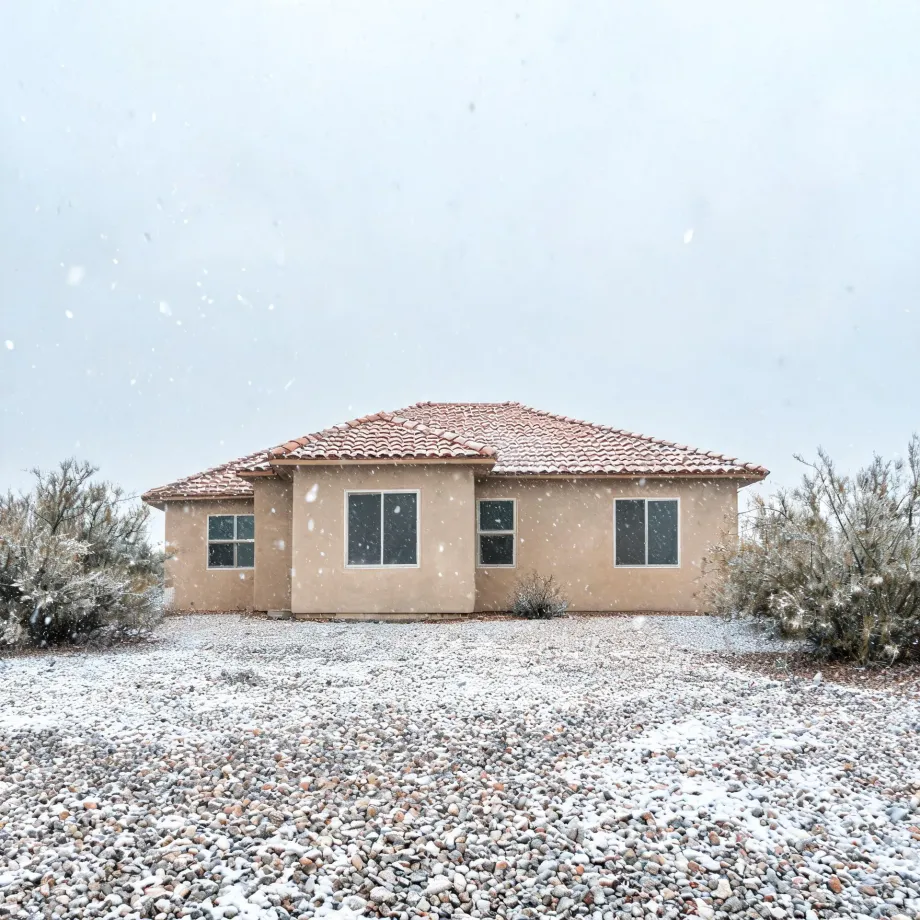
Sizing a heat pump for Sandoval County means working out how cold it actually gets here, because a heat pump's output drops as the outdoor temperature falls. Homes in Sandoval County, NM run heat about eight months a year, from October through May. A unit that covers the house comfortably on a mild October evening may fall short on a hard January night, and the gap between those two conditions is what a contractor has to close before they can spec equipment. That means back-up heat is a real design question, not an afterthought. A contractor will run a room-by-room load calculation and match both the primary unit and any supplemental heat source to what this house, in this climate, actually needs to stay warm through the coldest part of the season.
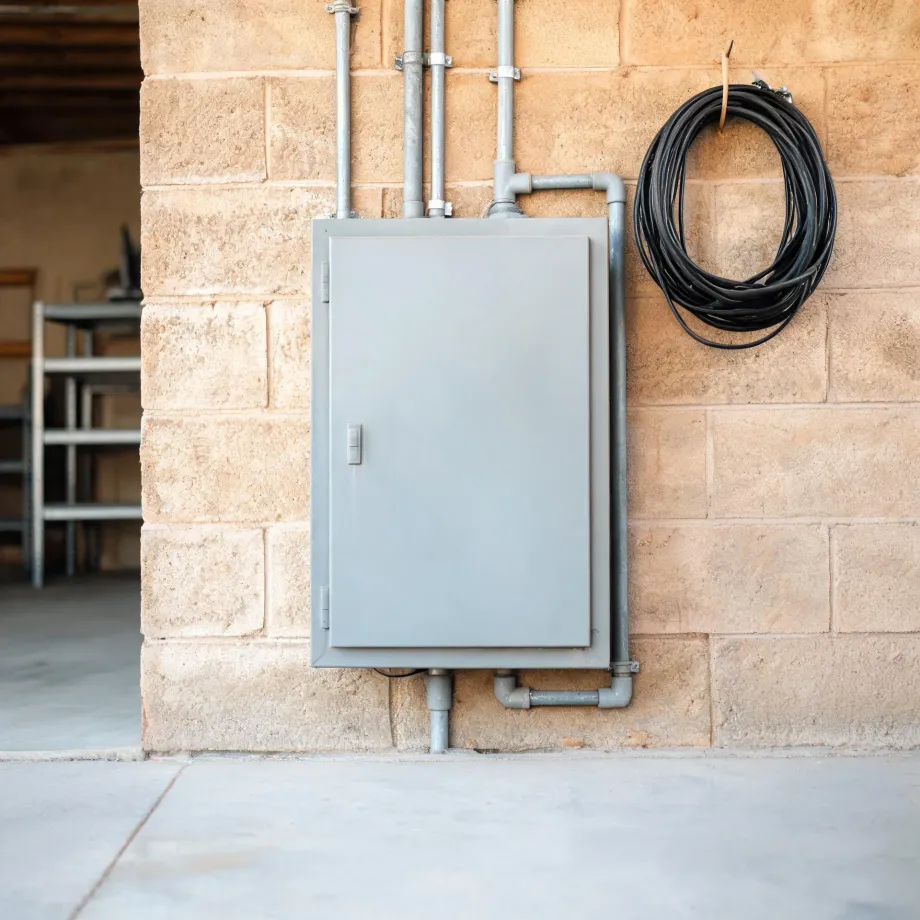
Ductwork designed for a gas furnace moves air at different volumes and static pressures than a heat pump needs, and in a county where a large share of the housing predates the equipment now being installed, that mismatch is what a contractor has to resolve before the new unit can perform correctly. Half the homes in Sandoval County, New Mexico were built in 1997 or earlier (2020-2024 ACS 5-year). A heat pump placed on ductwork sized for something else will not deliver what the equipment is rated for, and no amount of tuning the unit itself fixes a distribution system that was never built for it. The electrical service is a separate check: panels in houses of this vintage were not planned around the draw of a modern heat pump, and whether the existing service can carry the new load is something a contractor measures, not assumes.
What a Heat Pump Installation Puts in Your Home
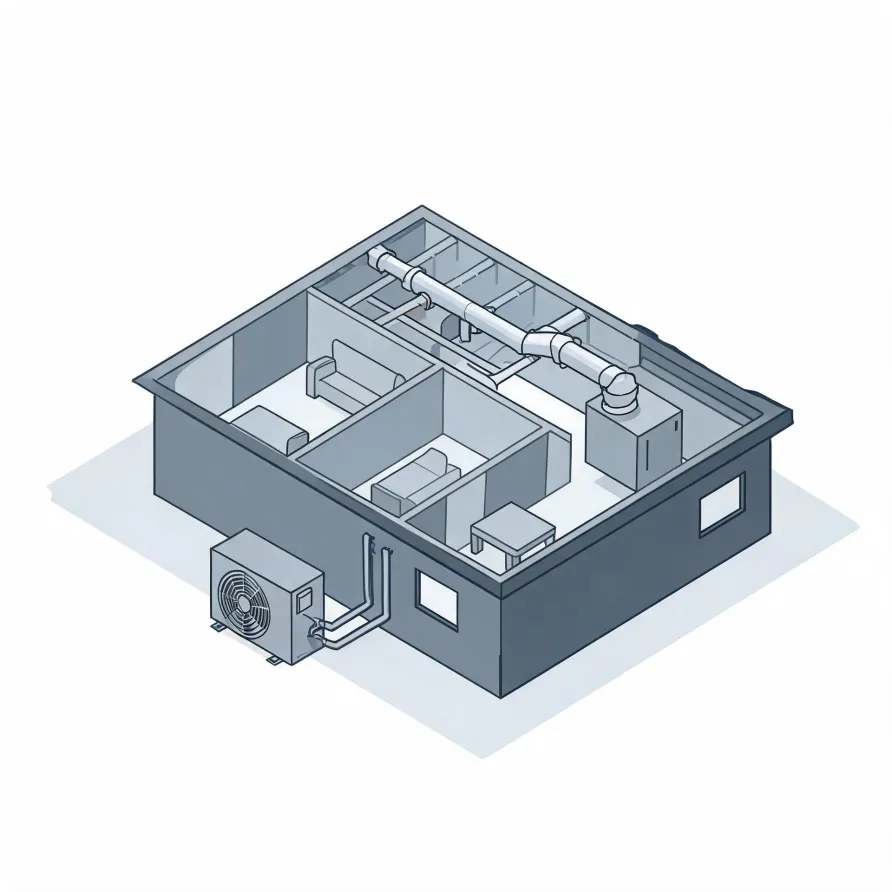
The outdoor unit is the piece most homeowners notice first. It sits on a pad beside the house and holds the compressor and the outdoor coil, which together do the core work of moving heat between the refrigerant and the outside air. Inside, the air handler mounts in a utility closet, attic, or basement and pushes conditioned air through the home.
A refrigerant line set runs between the two units, carrying refrigerant back and forth through insulated copper tubing. A thermostat on an interior wall ties the whole system together, giving the homeowner control over when and how the equipment runs.
The drawing shows a typical layout, and a licensed contractor determines exactly what applies to your house and how each piece gets positioned within it.
Get matched in Sandoval CountySandoval County, by the numbers
310 severe weather events were recorded in Sandoval County, New Mexico between 2015 and 2024.
NOAA National Centers for Environmental Information, Storm Events Database, bulk CSV export, events 2015-01-01 through 2024-12-31.Half the homes in Sandoval County, New Mexico were built in 1997 or earlier (2020-2024 ACS 5-year).
U.S. Census Bureau, 2020-2024 American Community Survey 5-Year EstimatesSandoval County, New Mexico holds 60,925 housing units (2020-2024 ACS 5-year).
U.S. Census Bureau, 2020-2024 American Community Survey 5-Year EstimatesOwners occupy 83.5% of the occupied homes in Sandoval County, New Mexico (2020-2024 ACS 5-year).
U.S. Census Bureau, 2020-2024 American Community Survey 5-Year EstimatesHeat Pump Installation Rules for Sandoval County, New Mexico2 sourced standards and codes
Contractor Requirements in Sandoval County, New Mexico
New Mexico’s contractor licence does not reach casual, minor or inconsequential work taken one project at a time and totalling no more than seven thousand two hundred dollars ($7,200) a year — but the exemption has to be declared to the division, it is not automatic.
New Mexico requires a contractor licence classified for the work being done: no person may act as a contractor without one, and mechanical work falls to the division’s mechanical bureau.
Severe Weather Events in Sandoval County
Sandoval County's climate puts real demands on heating and cooling equipment year-round. A heat pump sized and installed for local conditions handles that load more reliably than one specified for somewhere else.
310 severe weather events, 2015–2024. Source: NOAA National Centers for Environmental Information, Storm Events Database.